

21/02/2026
ERP systems were thought to be resources that only big businesses could afford for a long time. ERP was perceived as costly, dangerous, and unaffordable for the majority of enterprises due to its complicated architecture, lengthy installation times, and high setup expenses.
Today, that perception has altered totally.
Businesses of all sizes can now access robust business management capabilities without making significant upfront investments thanks to the growth of subscription-based ERP solutions. The emphasis on flexibility, affordability, and actual business value in modern ERP solutions has completely changed how businesses run their operations.
Why ERP Is No Longer Expensive
ERP used to feel pricey primarily because of how it was marketed and utilized, not because of the program itself. Businesses had to spend a lot of money on traditional ERP before they could truly benefit from it.
This reasoning was completely altered by subscription-based approaches.
Businesses can now start small, scale gradually, and pay monthly based on real usage, as opposed to paying once and hope the system meets long-term demands. This method simplifies ERP, particularly for expanding businesses that require control rather than complexity.
Why Conventional ERP Systems Were Expensive
The inflexible structure of traditional ERP systems frequently resulted in needless financial strain.
Before the system was ever implemented, businesses had to pay hefty one-time license costs. In addition, hardware, IT staff, and on-premise servers were needed to maintain the system. Return on investment may be delayed by implementation efforts that take months or even longer.
ERP ownership is unexpected and challenging to budget for due to additional costs associated with maintenance, upgrades, and system enhancements. This turned ERP from a strategic investment into a long-term financial burden for many businesses.
Subscription-Based ERP Systems' Ascent
A more straightforward and adaptable option was introduced by subscription-based ERP solutions. Instead of purchasing software entirely, businesses subscribe to the system on a monthly basis.
Because these solutions are typically cloud-based, users can use the platform from anywhere at any time without having to set up complicated infrastructure. Businesses only have to pay for the modules they really use, so they may start with the most basic ones and develop as their needs do.
This methodology matches ERP costs with business development, making it easier to implement, manage, and scale.
How Logix ERP Lowers the Cost of Enterprise Software
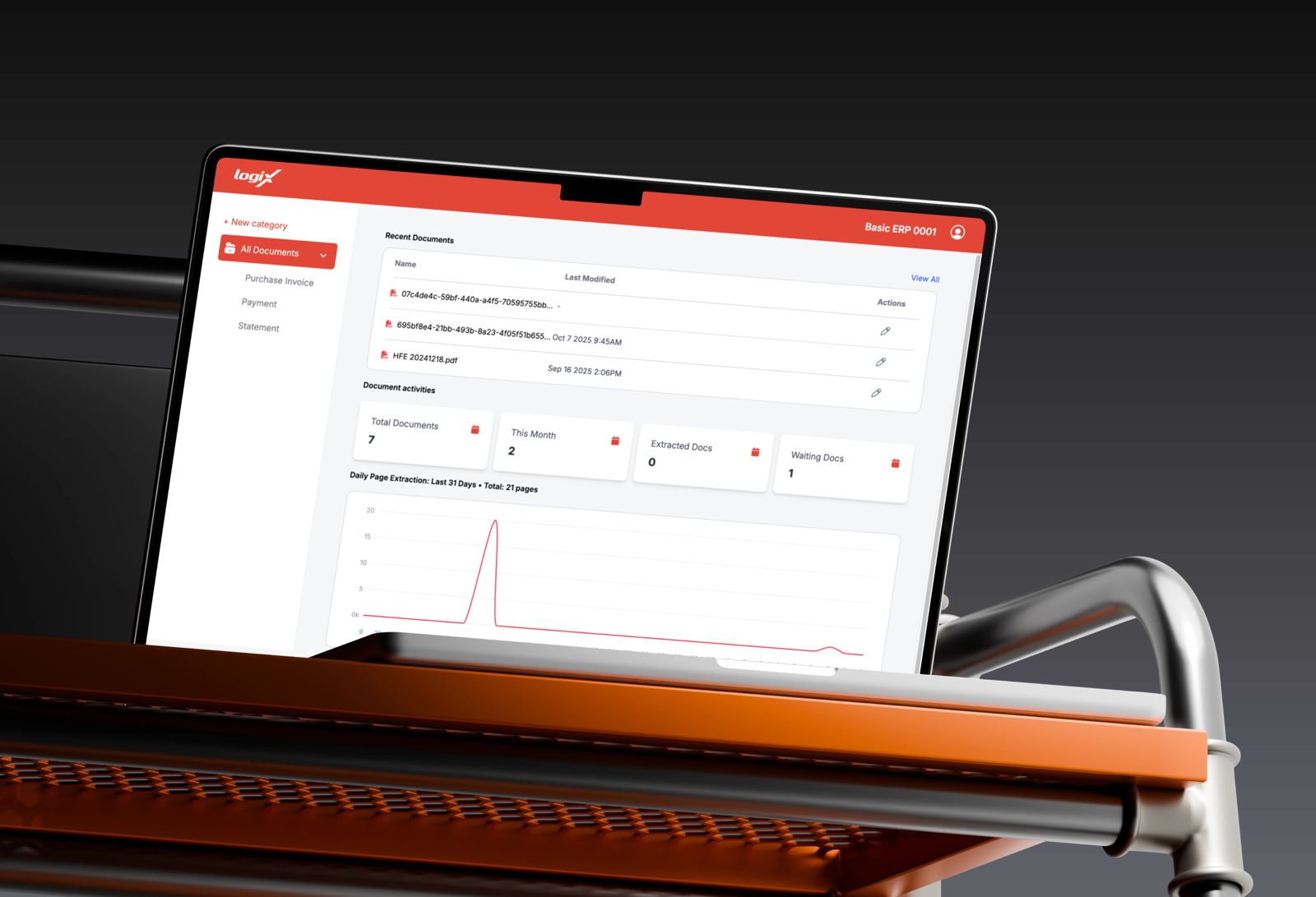
Modern enterprises that want productivity without needless expenses were the focus of Logix ERP's design.
Logix eliminates the conventional obstacles to ERP adoption by providing a subscription-based pricing model.
Long implementation timelines, costly servers, and a significant upfront investment are not required. Companies can begin utilizing the system right away and concentrate on streamlining operations rather than handling technical intricacy.
With this strategy, businesses can keep budgetary flexibility while gaining access to enterprise-level features.
The True Benefit of Subscription ERP: Reduced Expenses, Increased Value
Cost predictability is one of the key benefits of subscription-based ERP systems. Monthly price minimizes unforeseen costs and simplifies budgeting.
Internal effort and operational risks are decreased because IT maintenance, system updates, and security enhancements are managed within the subscription. Instead of concentrating on system upkeep, businesses may concentrate on strategy, growth, and performance.
This approach frequently yields greater value over time than conventional ERP, particularly for businesses that require flexibility.
Principal Advantages of a Subscription Model with Logix ERP
Logix ERP subscription-based access offers useful advantages that have an immediate effect on day-to-day operations.
Users and modules can be scaled by businesses as they expand, guaranteeing that the system always meets present requirements.
Decision-making is enhanced and human errors are decreased using real-time data across departments. Without interfering with workflows, automatic updates guarantee that the system remains safe, compliant, and current.
Above all, a single platform that links finance, sales, operations, and management allows teams to work together more efficiently.
A Useful Comparison between Subscription-Based and Conventional ERP
The distinction between subscription-based ERP and conventional solutions is immediately apparent.
Traditional ERP demands large upfront investment and long-term commitment. Subscription ERP lowers financial risk, spreads expenses over time, and enables companies to easily adjust to change.
In terms of operation, subscription-based solutions are quicker to deploy, simpler to update, and more appropriate for businesses in dynamic markets where adaptability is crucial.
How ERP Based on Subscriptions Promotes Long-Term Business Growth
Systems must expand together with enterprises. Subscription-based ERP supports this by allowing organizations to add users, features, and modules without affecting existing operations.
Real-time data enhance strategy planning and enable management to react to market shifts more quickly. Collaboration is strengthened by centralized data, which guarantees that all teams have access to current, correct information.
Because of its adaptability, ERP is a growth enabler rather than a constraint.
Conclusion: Enabling Modern Businesses to Access ERP
ERP systems are no longer pricey, sophisticated instruments exclusively for huge organizations. ERP is now an affordable, adaptable, and accessible solution for contemporary enterprises thanks to subscription-based models.
With the correct system, businesses can take charge, increase productivity, and grow with confidence—all without experiencing significant financial strain. This new reality is catered to by Logix ERP, which gives companies a useful approach to implement ERP on their own terms.